The transition to e-trucks changes the logistics industry
The electrification of road freight transport is gaining momentum. New EU regulations, rising CO₂ costs, and customer requirements mean that logistics companies are increasingly having to consider switching to electric trucks. The question is therefore no longer whether the switch will happen, but how quickly companies will be prepared for it.
Regulatory pressure
Tighter CO² limits for heavy commercial vehicles and the use of zero-emission vehicles will be unavoidable in the long term.
Economic pressure
Rising CO₂ costs, volatile diesel prices, and more efficient electric powertrains.
Pressure from clients
Shippers and companies demand CO₂ transparency and low-emission transport.
The biggest bottleneck in the eTruck transformation is not the truck itself, but the charging infrastructure.
When switching to e-trucks, many logistics companies initially focus on the vehicles themselves. In practice, however, it quickly becomes apparent that the biggest challenge is the available charging capacity at the location.
At many depots, the existing grid connections are too small. When several vehicles are charging at the same time, locations quickly reach their limits. Low charging capacities also extend charging times and thus the downtime of the vehicles.
Expanding the grid connection is often not a short-term solution, as approvals, planning, and construction take several years and require high investments. In addition, high charging capacities can cause expensive peak loads in the power grid.
FleetBooster as an ultra-fast charging solution without grid expansion
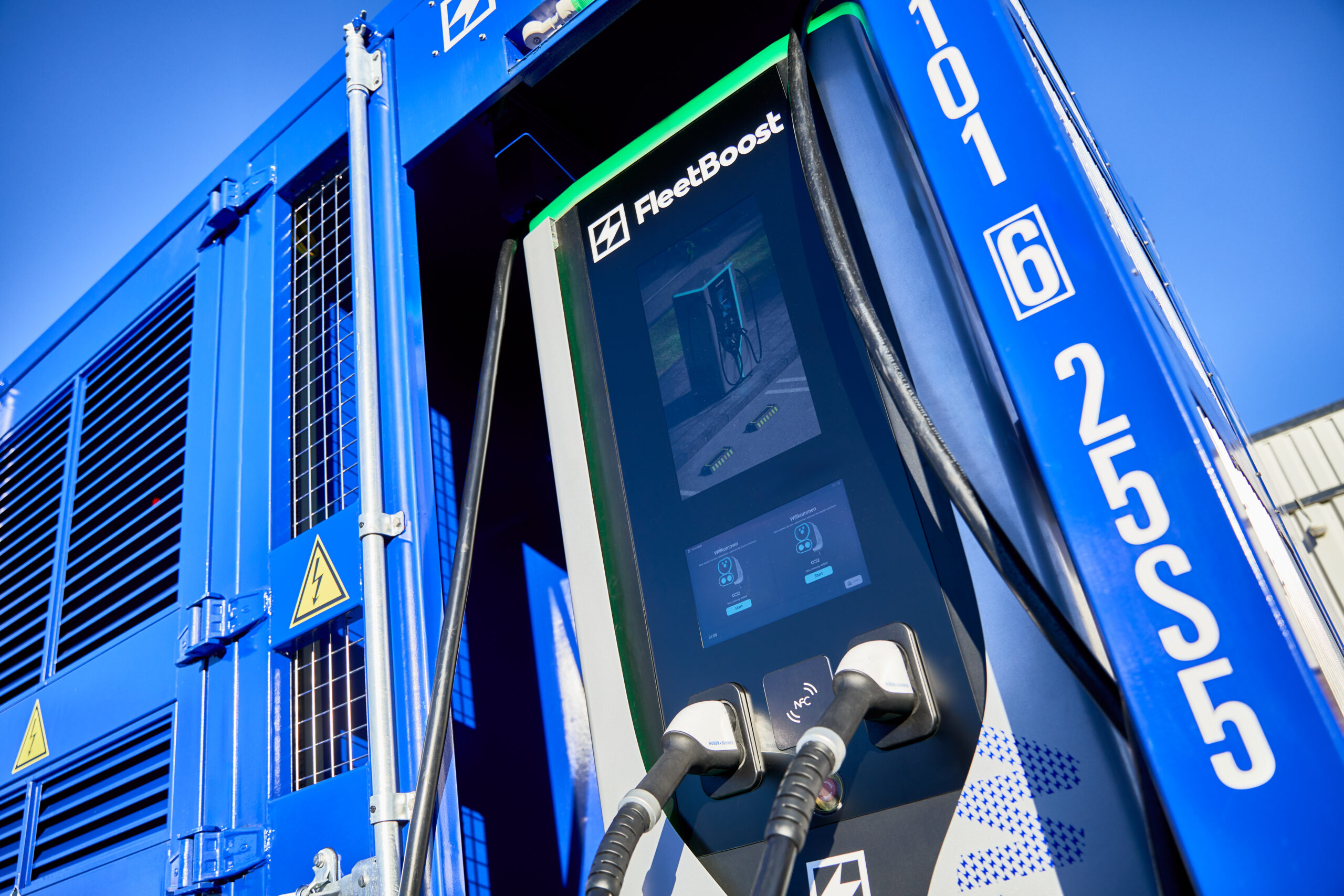
FleetBooster solves the central infrastructure problem when charging electric trucks: insufficient power at the grid connection. The mobile battery storage system continuously charges itself via the existing grid connection and stores the energy. When an electric truck needs to be charged, FleetBooster provides significantly higher charging power at short notice than the grid connection can actually deliver.
This transforms a weak connection into a powerful charging infrastructure without years of network expansion and high investment costs. For companies, this means not only greater flexibility, but also economic advantages: the existing grid connection can be used efficiently, expensive infrastructure measures can be avoided, and peak loads in the power grid can be reduced.
This enables:
- Charging multiple eTrucks quickly in succession or simultaneously
- make efficient use of existing grid connections
- to avoid costly and time-consuming network expansions
The FleetBooster offers you maximum flexibility—both technically and financially.
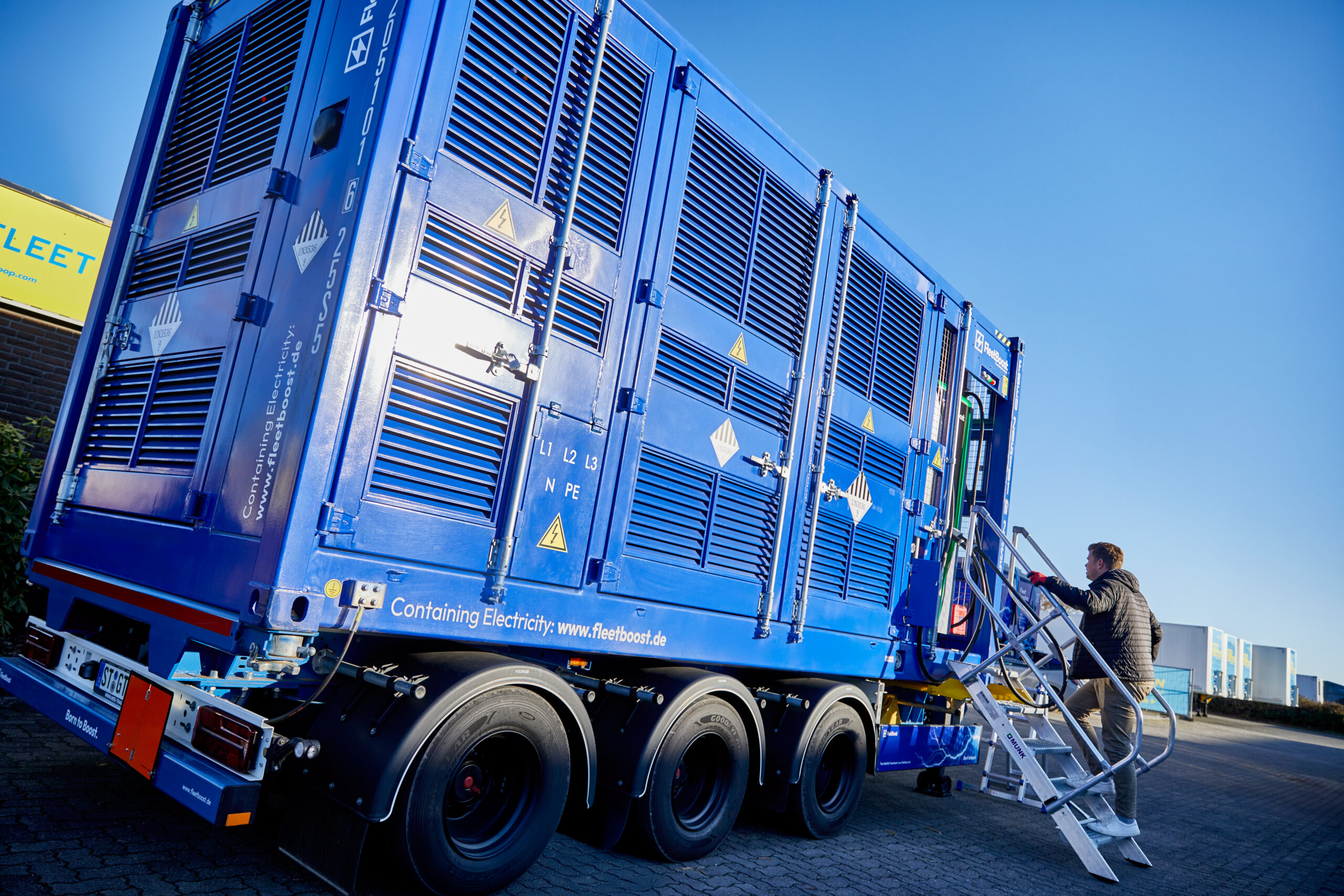
Thanks to its mobile container design, the FleetBooster can be quickly installed and moved to another location as needed. This ensures that the required charging capacity is always available where it is needed to operate your electric truck fleet. If energy demand increases, the infrastructure can also be easily expanded: multiple FleetBoosters can be deployed in parallel at a single location to provide additional charging capacity.
Your company also retains flexibility when it comes to financing. FleetBooster is available as both a purchase and a rental option (including pay-per-use). This allows companies to either make a long-term investment in their own charging infrastructure or opt for the rental solution. This way, you can expand your charging infrastructure gradually and adapt it to the growth of your fleet.
Made just for logistics? Far from it.
The FleetBooster can be used wherever high electrical power is required but the available grid connection is limited. Thanks to its mobile and modular design, there are virtually no limits to its use, from permanent locations to temporary applications.
Transportation & Logistics
Fast charging for electric truck fleets at depots, logistics centers, or along transport corridors.
Construction & Infrastructure
Power supply for construction sites, electric construction machinery, or temporary charging infrastructure, even without a high-performance grid connection.
Passenger transport
Flexible charging infrastructure for electric buses, shuttle fleets, or municipal vehicles.
Aviation & Ports
Power supply for electric ground vehicles, port logistics, or shore power solutions.
Agriculture & Industry
Mobile energy for electrical machines, farm infrastructure, or energy-intensive applications on the premises.
Events & temporary locations
Quiet and emission-free energy supply for events, festivals, or temporary infrastructures.
impressions

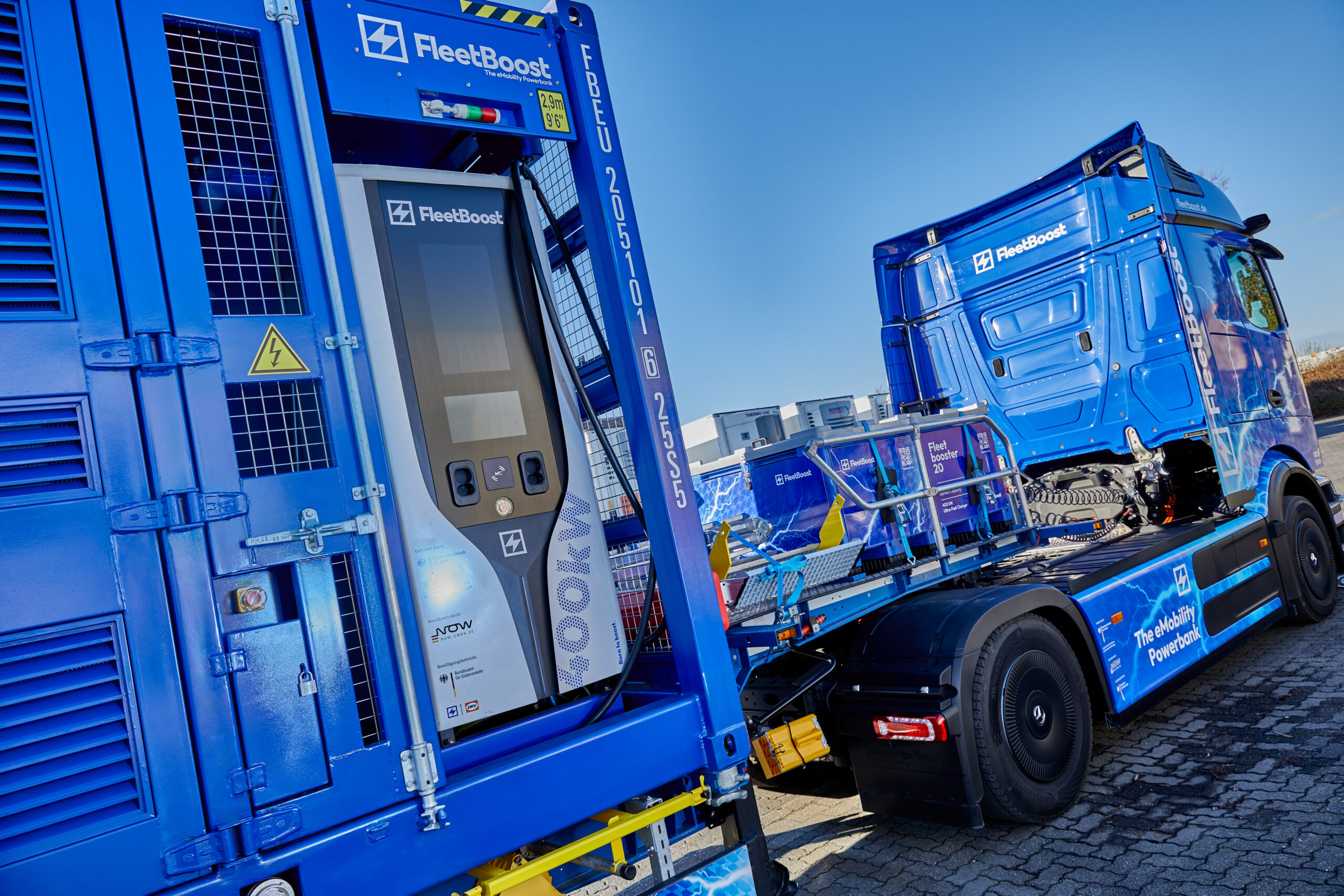
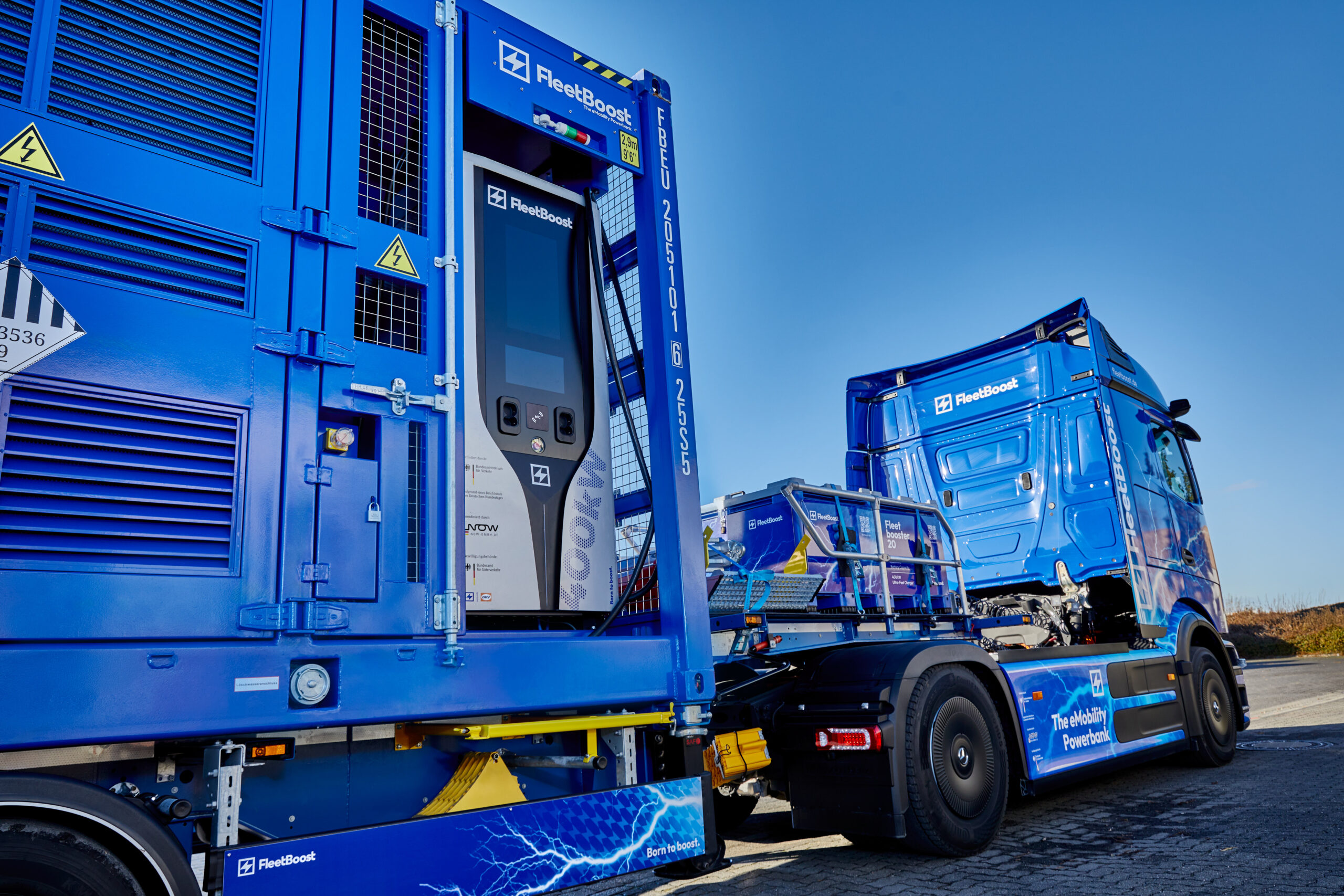
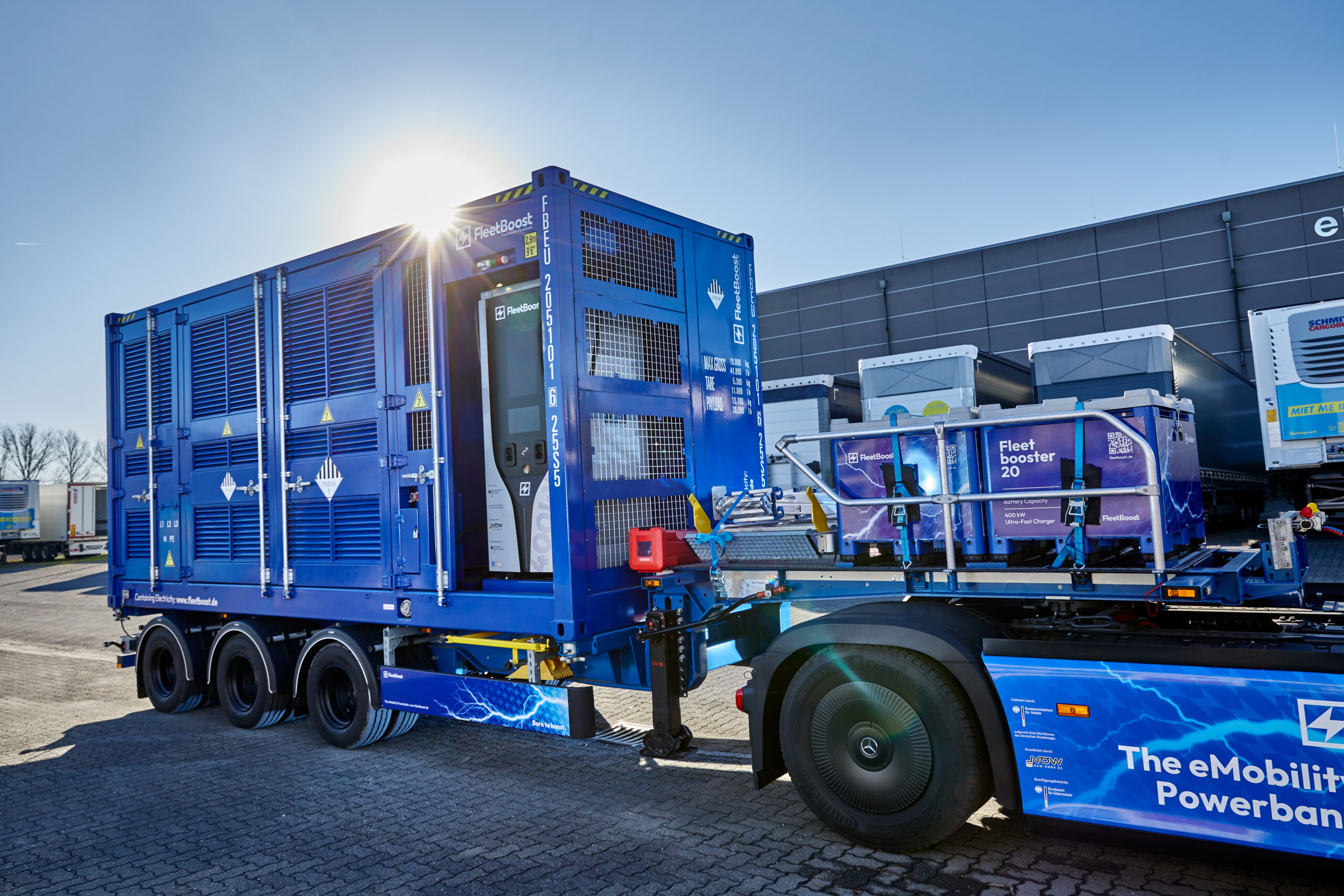
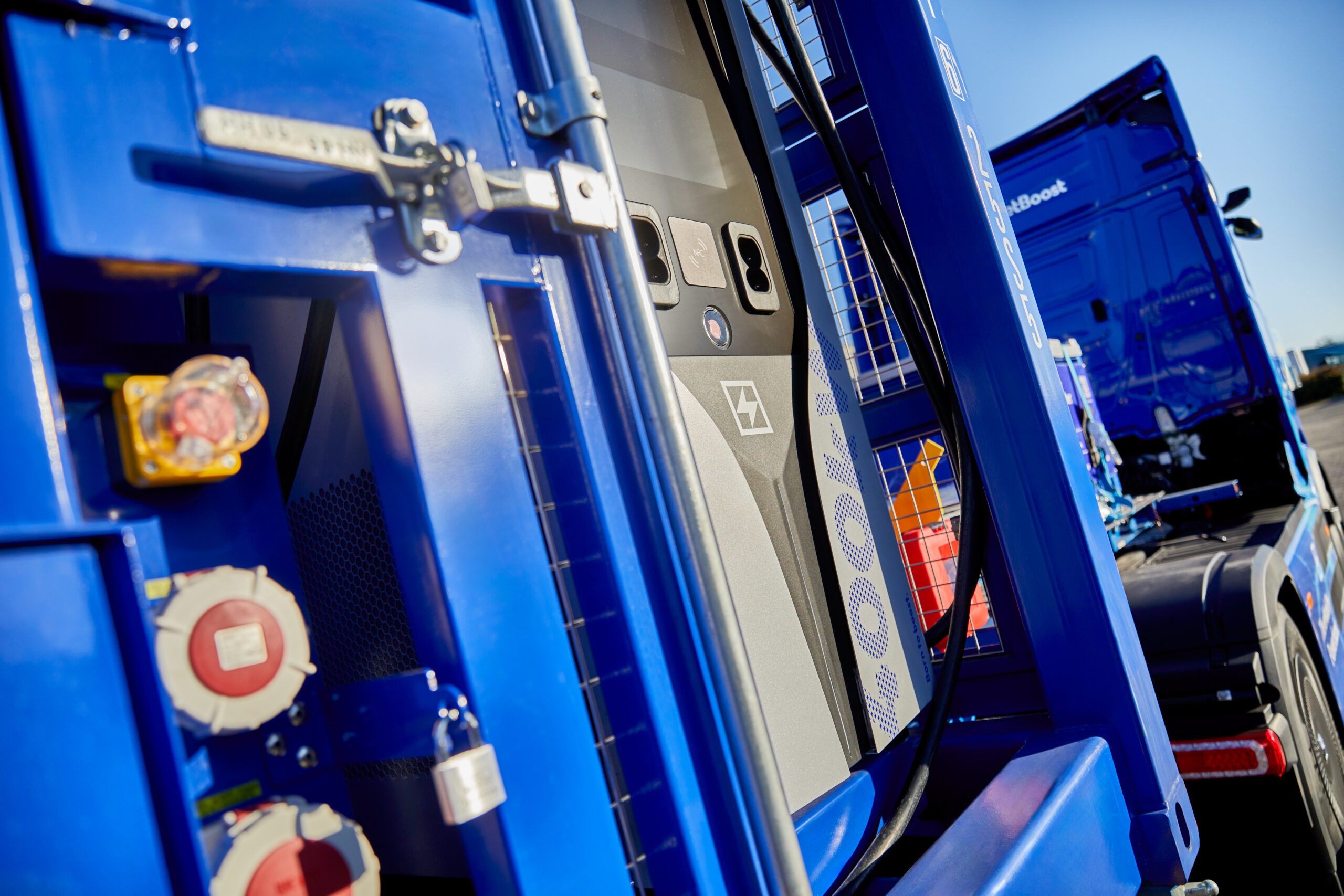



Why you should try FleetBooster now
Many companies are currently still in the planning phase for their electric fleet. Now is the right time to find out what requirements your location actually has in terms of charging infrastructure and energy supply.
With a FleetBoost test, you can check how powerful charging works in your business under real-world conditions—even before you make major investments in infrastructure or grid expansion.
During the test, you can find out, among other things:
- what charging capacities your vehicles actually require
- how the charging infrastructure can be integrated into your location
- what requirements your grid connection must meet
- how charging can be integrated into your daily fleet operations
This gives you a sound basis for making early decisions about the electrification of your fleet.
Frequently Asked Questions
What is a FleetBooster?
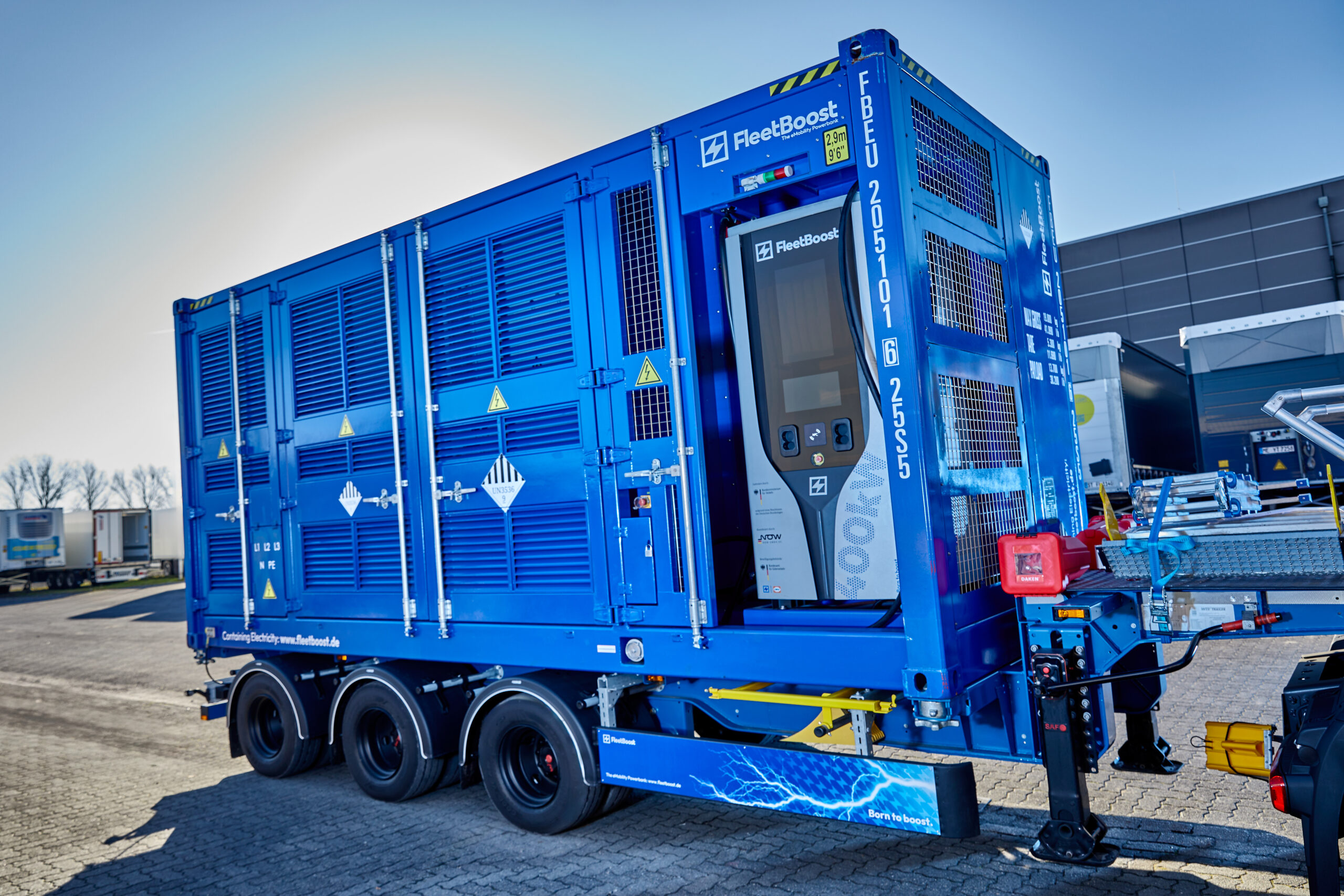
A FleetBooster is a mobile energy and charging unit specifically designed for DC fast charging of electric commercial vehicle fleets. The FleetBooster combines battery storage, charging infrastructure, and intelligent energy management. Despite a limited grid connection, e.g., 80 kW (CEE 125A), the FleetBooster can provide up to 800 kW of DC fast charging, actively supporting the scaling of electric truck and commercial vehicle fleets. The system can be deployed overnight on a plug-and-play basis without requiring a building permit.
How does FleetBoost help when network connectivity is limited?
FleetBoost stores energy via the existing connection and makes it available as an additional source during high-power charging.
For which locations is FleetBoost suitable?
For depots, depots, logistics centers, construction sites, and temporary work sites.
Can FleetBoost be combined with solar power or other energy sources?
Yes, the solution can be integrated into existing energy generation and energy management systems.
How long does it take to charge an electric truck?
That depends greatly on the charging capacity. With powerful fast chargers, many electric trucks can significantly recharge their batteries in around 45 to 90 minutes. With lower charging capacities, the charging process can take correspondingly longer.
How much energy does an electric truck need?
The energy requirements of an electric truck depend on the vehicle type and the route. Modern electric trucks have batteries with capacities ranging from 300 to over 600 kWh. Fast charging often requires charging capacities of 300 to 500 kW.
What are load peaks?
Peak loads occur when a large amount of electricity is required simultaneously within a short period of time, for example when several electric trucks are charging at the same time. The higher these peaks are, the higher the electricity costs can be. Energy storage systems such as FleetBoost can cushion such peak loads by temporarily storing energy and releasing it when needed.
What can I charge with the FleetBooster?
The FleetBooster is designed for applications that require high charging capacities. Depending on the model, the system provides up to 400 kW or 800 kW of charging capacity and has battery storage with a capacity of over 1 to more than 2 MWh. This makes the FleetBooster particularly suitable for large electric vehicles and energy-intensive applications.
Typical areas of application include, for example:
- electric trucks in depot or intermediate charging
- Electric buses in public or private passenger transport
- electric construction machinery on construction sites or infrastructure projects
- Commercial vehicles and fleet vehicles in logistics, industry, or municipal operations
In addition, the FleetBooster can also supply other large electrical consumers.
Can I also use FleetBoost on a temporary basis?
Yes. FleetBoosters are mobile and can therefore also be used temporarily, for example for pilot projects, construction sites, events, or temporary solutions during network expansion.
Does the FleetBooster test cost anything?
There are costs associated with the FleetBooster test, as transport, technology, and personnel must be planned for practical use. The exact amount depends on the location and scope of the test.
If you decide to purchase a FleetBooster after the trial period, the trial costs will of course be deducted from the purchase price.
We would be happy to discuss the details of the test with you in person. This will allow you to get to know the technology under real-world conditions and at the same time create a sound basis for your decision.
How much does a FleetBooster cost?
FleetBoost is available as a purchase, rental, or pay-per-use solution. This allows companies to choose the model that best suits their current project phase and electrification strategy.
When you purchase this product, you are making a long-term investment in your own charging infrastructure and can use the FleetBooster permanently at your location.
Renting offers a flexible alternative—ideal for pilot projects, test phases, or if you want to gain experience with electric fleets without making a major investment right away.
Alternatively, a charge-per-use model is also possible: you only pay per kilowatt hour charged, without any CapEx investment in the charging infrastructure.
The solution that makes the most sense for your company depends on your location, your fleet, and your future energy requirements. We would be happy to advise you personally.
Is the FleetBooster just a temporary solution?
No – the FleetBooster can be used both temporarily and permanently.
Many companies initially use it as a flexible solution to gain initial experience with electric trucks or to bridge the gap until a possible grid expansion. At the same time, however, the FleetBooster can also be part of the charging infrastructure in the long term.
The integrated battery storage system increases charging capacity, reduces peak loads, and makes efficient use of existing grid connections. That is why many companies are choosing to permanently integrate the FleetBooster into their energy and charging infrastructure.
Why is my power connection insufficient?
Many logistics sites were not originally designed for charging electric trucks. The existing electrical infrastructure is usually only dimensioned for buildings, lighting, or smaller consumers.
However, charging electric trucks significantly increases energy consumption. Fast chargers often require 300 to 400 kW per vehicle. If several trucks are charging at the same time, the power requirement can quickly reach 1 to 3 MW.
However, many locations only have a grid connection capacity of 200 to 400 kW. The existing connection is therefore often insufficient to charge several vehicles at the same time.
What requirements does a FleetBooster need at the location?
The FleetBooster is deliberately designed as a plug-and-play system and requires only a few prerequisites to be used. This means it can be quickly installed and operated at many logistics locations.
Typical minimum requirements are:
- Power connection: A mains connection from approximately 80 kW to 800 kW is sufficient, for example via 125 A CEE or Powerlock.
- Footprint: A suitable area for a 20- or 40-foot container (depending on the model).
- Access for transport: The location should be accessible by truck so that the container can be delivered or moved.
- Integration into infrastructure: Optionally, the FleetBooster can also be connected to existing systems such as PV systems or energy management systems.
Would you like to find out how high-performance charging can be implemented at your location?
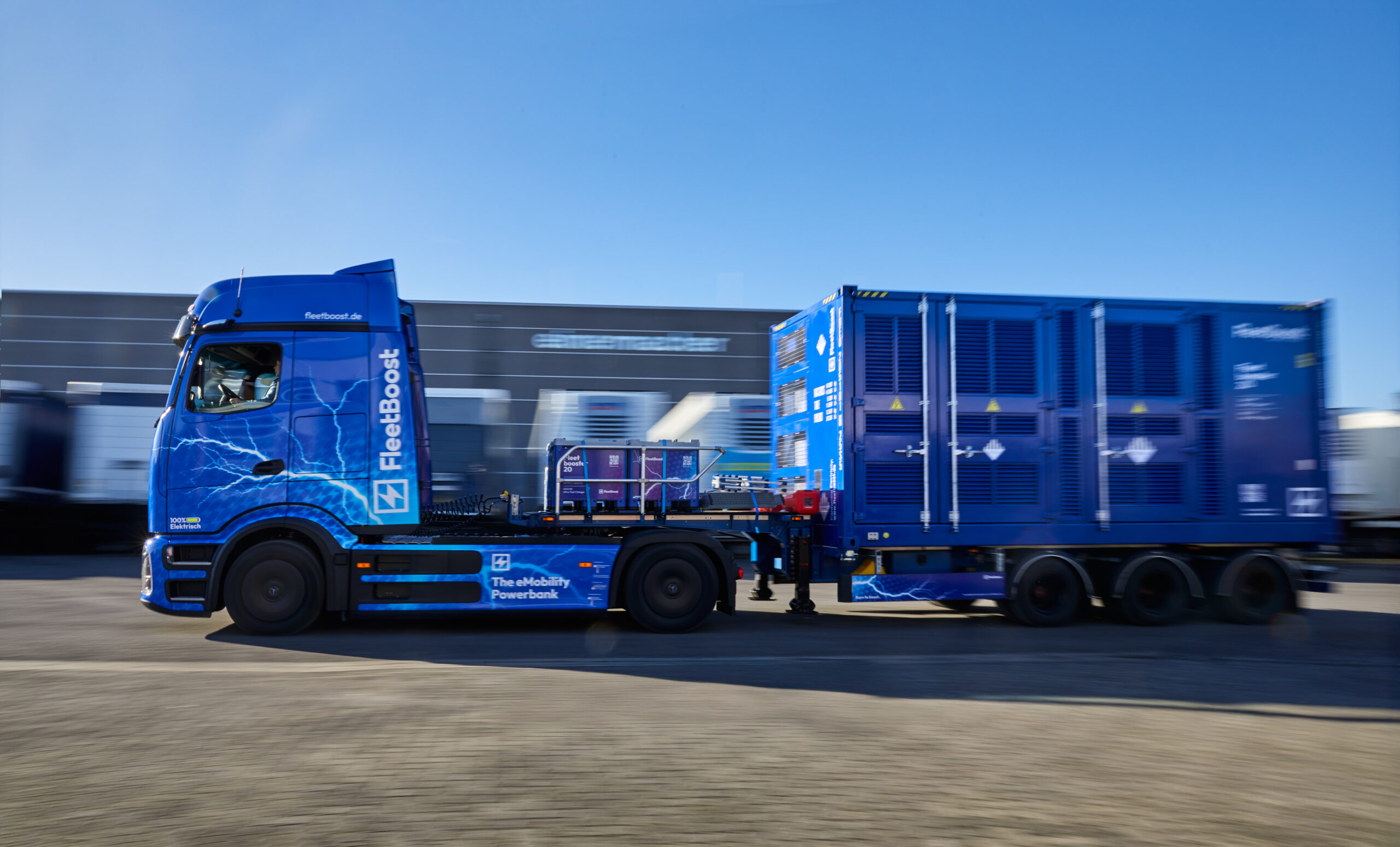
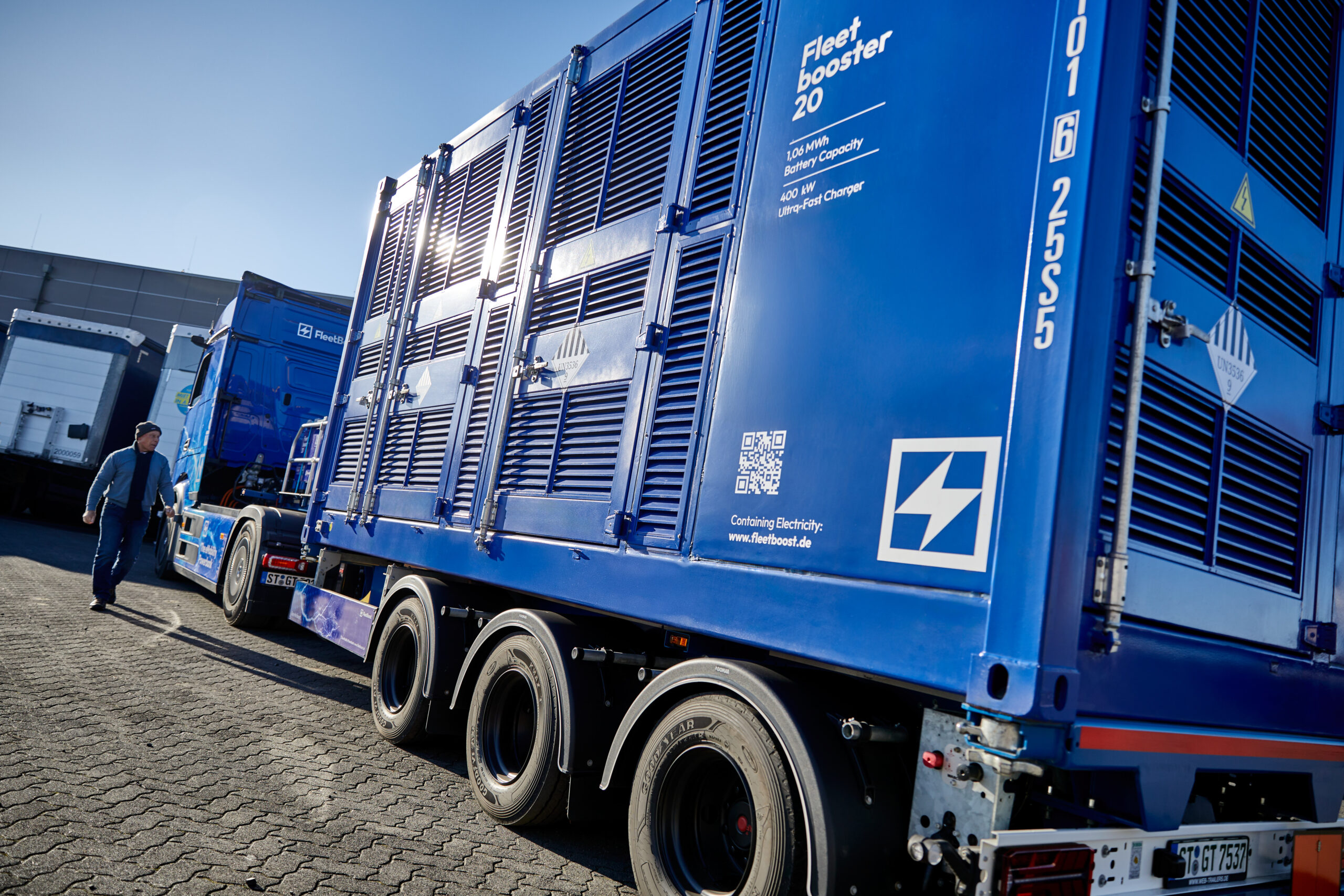
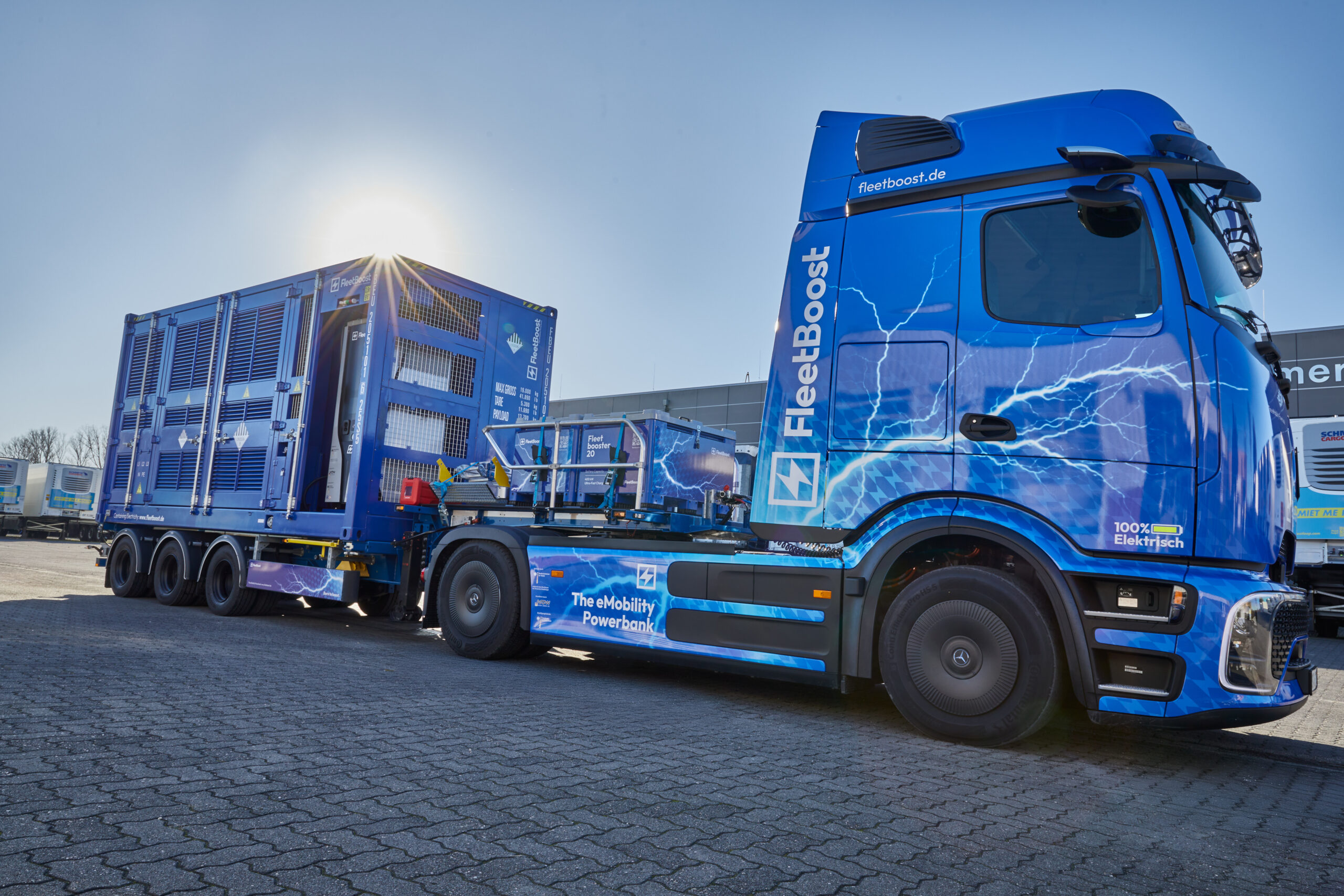
Experience the FleetBooster where it matters to you: in everyday operations. With our eActros and FleetBooster 20, we demonstrate how powerful charging infrastructure works under real-world conditions, either directly on your premises or at our test site. This allows you to make an informed assessment of how additional charging power can be integrated into your existing processes in an economically viable, flexible, and scalable manner.
Arrange your individual test appointment now using our inquiry form!
Still have doubts?
Then let's talk about it. Our team will answer your questions and show you how powerful charging with FleetBoost can work at your location.
You don't have to think twice or wait for a response—just give us a call. We are happy to take the time to answer your questions and discuss the options for your location together.
Call now – download tomorrow!